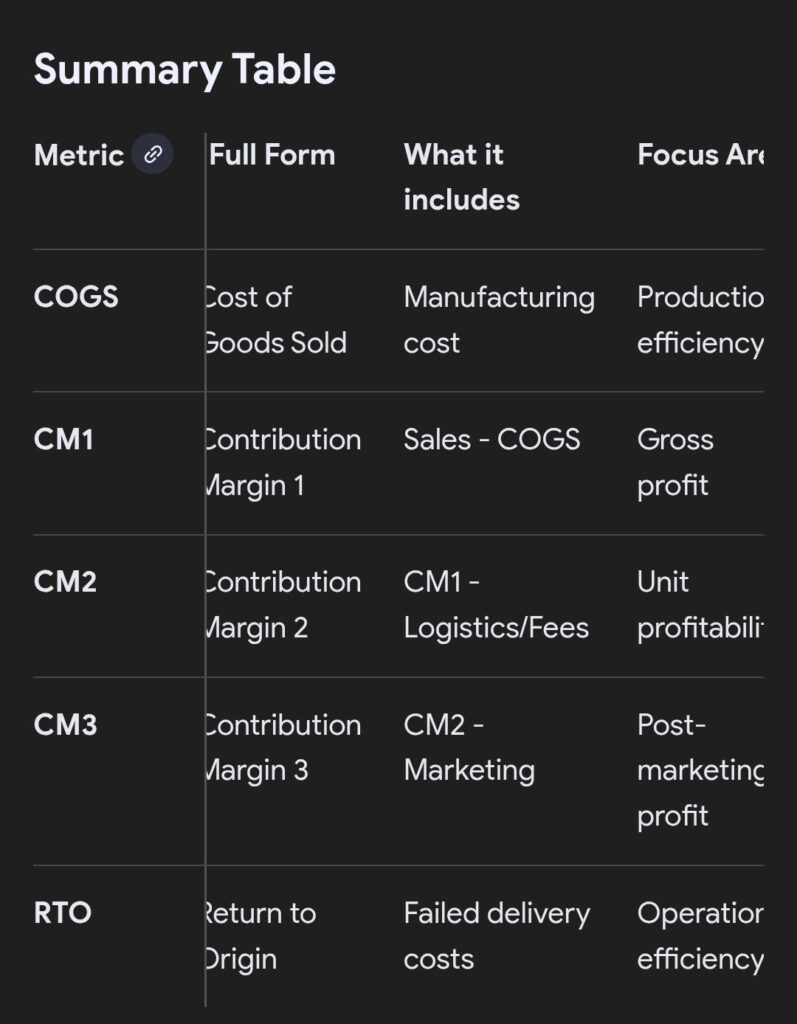
1. COGS (Cost of Goods Sold)
COGS is the direct cost of producing the goods, including raw materials, manufacturing, and packaging.
- Formula: Direct Materials + Direct Labor + Packaging.
2. CM1 (Contribution Margin 1) – Product Margin
CM1 shows how much money is left after paying for the product itself, before shipping or advertising costs.
- Formula: Sales Revenue – COGS.
- Significance: Measures the gross efficiency of the production.
3. CM2 (Contribution Margin 2) – Delivered Margin
CM2 accounts for logistics and transaction costs, making it crucial for e-commerce, as it considers the cost of getting the product to the customer.
- Formula: CM1 – (Shipping Costs + Logistics + Payment Gateway Fees + RTO Costs).
- Significance: Sharks usually want this to be positive and preferably double-digit.
4. RTO (Return to Origin) in Shark Tank
RTO refers to products that are shipped but returned by the customer before delivery, causing a loss in shipping costs and potential damage to inventory. In Shark Tank India, high RTO rates are a major red flag for D2C brands, as they destroy profitability in CM2.
5. CM3 (Contribution Margin 3) – Net Marketing Margin
CM3 takes into account customer acquisition costs (CAC).
- Formula: CM2 – Marketing/Advertising Costs (Performance Marketing).
- Significance: Shows if the business is profitable after spending on ads to acquire customers.
Reference link https://storehero.ai/contribution-margin-formula/#:~:text=1.,selling%20sneakers%20for%20%E2%82%AC100: